



Philodendron Xanadu
Thaumatophyllum xanadu · Araceae · Leafy green plant
Also called Xanadu, Winterbourn
It forms a wide, compact clump rather than climbing. Water when the top few centimetres are dry.
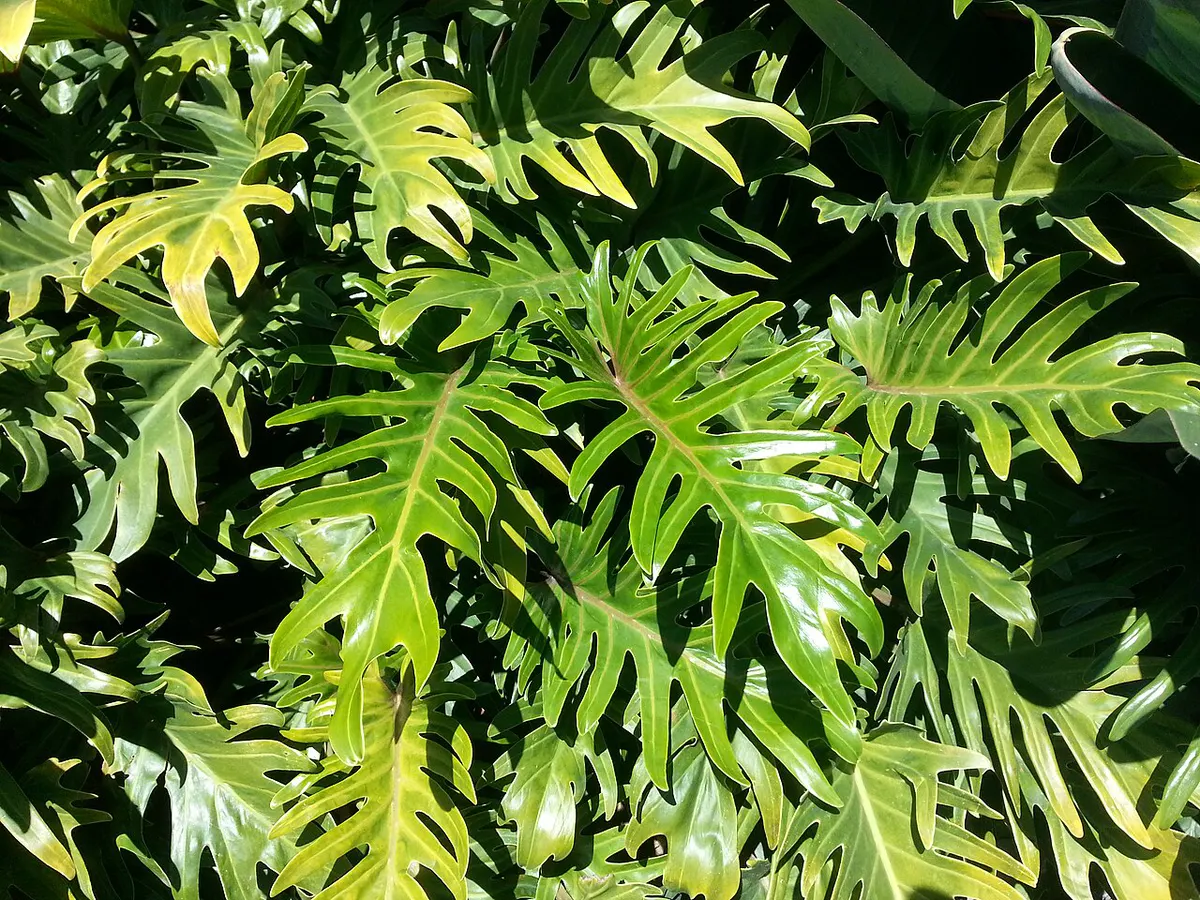
Photo: Piwaiwaka, CC BY-SA 4.0, via Wikimedia Commons
- Light
- Bright, indirect · copes with less
- Water
- Water when the top 2–3 cm of soil are dry.
- Humidity
- Average
- Temperature
- 13–30 °C
- Care level
- Easy-going, a good first plant
- Pets
- Not safe for cats and dogs
How often to water Philodendron Xanadu
About every 7 days in summer and every 12 days in winter. Water when the top 2–3 cm of soil are dry.
Roughly how often, in a medium pot (12–20 cm) in the light it likes. Smaller pots, brighter spots and warm balconies need water sooner; big pots and dim corners later.
- Spring every 8 days
- Summer every 7 days
- Autumn every 10 days
- Winter every 12 days
Worked out by LeafMinder’s schedule. In the app it then adapts to your home, from your “still damp” and “bone dry” answers.
Feeding and repotting
Feed about every 30 days from March to September, with a houseplant fertiliser at half strength. Not in the colder months. Check whether it needs a bigger pot every 24 months or so, ideally in spring.
Thirsty, or too wet?
- When it would like water
- The leaf stalks soften, the leaves start to droop or lean outwards, and the top few centimetres of soil feel dry. A thorough watering usually lifts them again within a day.
- When it has had too much
- Older leaves turn yellow, and the soil stays wet and may smell sour. Let it dry further before watering again, empty the saucer, and check that the drainage holes aren't blocked.
Soil and pot
A rich, free-draining houseplant mix suits it; a little bark or perlite stops it packing down. Use a sturdy pot with drainage holes, wider rather than tall, since the clump spreads outwards. Roots crowding the surface or growing out of the holes, and water running straight through, mean it is time for the next pot size, usually about every two years in spring.
Common problems
- Yellow lower leaves
- Overwatering or a pot that drains poorly; an old leaf yellowing now and then is normal. Try first: Water only once the top few centimetres are dry, and make sure extra water can drain away.
- Brown, crispy tips or edges
- Very uneven watering, or too much feed leaving salts in the soil. Try first: Water evenly, flush the pot with plenty of plain water a few times a year, and feed at half strength.
- Long, floppy stalks and less-divided leaves
- Too little light. Try first: Move it somewhere brighter with indirect light; new leaves will come in more compact.
- Bleached or scorched patches
- Strong direct sun through glass. Try first: Keep it out of midday sun; a sheer curtain is often enough.
- Sticky leaves, webbing or white fluff
- Mealybugs, scale, spider mites, aphids or thrips. Try first: Isolate it, wipe the leaves, undersides too, with a damp cloth, and repeat weekly until the pests are gone.
Not sure what you’re seeing? A photo health check suggests possible causes. How health checks work
Propagation
Nurseries grow Xanadu mainly from tissue culture. At home, the usual route is division: older plants often form extra crowns at the base, and in spring you can ease the plant out of its pot and separate one with its own roots. Pot it in fresh mix, water it in, and keep it out of strong light for a week or two while it settles. It has no long stems, so cuttings are rarely practical.
Varieties and relatives
- Tree philodendron: Its much larger relative, with leaves on long stalks that can reach about 90 cm, and a short trunk with age.
- 'Winterbourn': A trade name for the same plant; plants sold under it show no known differences.
Questions people ask
How often should I water a Philodendron Xanadu?
About once a week in summer, every 8 days or so in spring, about every 10 days in autumn and around every 12 days in winter, in a medium pot indoors. Check that the top few centimetres of soil are dry first.
Is Philodendron Xanadu toxic to cats and dogs?
Yes. It contains calcium oxalate crystals, which cause mouth pain, swelling, drooling and sometimes vomiting if chewed, and the sap can irritate skin. Keep it away from pets and call your vet if one chews it; gloves help when you divide or trim it.
Does Philodendron Xanadu climb?
No. It is self-heading: it grows from a short stem as a dense, spreading clump and needs no moss pole. Outdoors in warm climates it reaches up to about 1.2 m tall and wider than that; in a pot it usually stays smaller, but give it room on all sides.
Why is Xanadu also called Thaumatophyllum?
It was described as Philodendron xanadu, and in 2018 botanists proposed moving it and its tree-like relatives into the genus Thaumatophyllum. Not every reference follows that change, so you will see both names on labels. The care is the same.
Sources and licences
This care guide was written with AI and checked against the sources below.
- Care checked against: NC State Extension Gardener Plant Toolbox, Clemson Cooperative Extension Home & Garden Information Center, UF/IFAS Extension EDIS, UF/IFAS Extension EDIS.
- GBIF Backbone Taxonomy: other botanical names. Record. CC BY 4.0. GBIF Secretariat (2023). GBIF Backbone Taxonomy. Checklist dataset https://doi.org/10.15468/39omei accessed via GBIF.org on 2026-11-15.
Material from these sources keeps its own licence; LeafMinder’s copyright doesn’t extend to it, and the sources don’t endorse LeafMinder.
General guidance. Every home is different, so the soil is always the best guide. About this advice
From LeafMinder’s plant care guides: leafminder.eu/plants/philodendron-xanadu