



Norfolk Island pine
Araucaria heterophylla · Araucariaceae · Leafy green plant
Also called Norfolk pine, House pine, Araucaria
Keep it in a bright, cool spot and water when the top few centimetres are dry. Lower branches that dry out do not regrow, so do not let the soil dry right through.
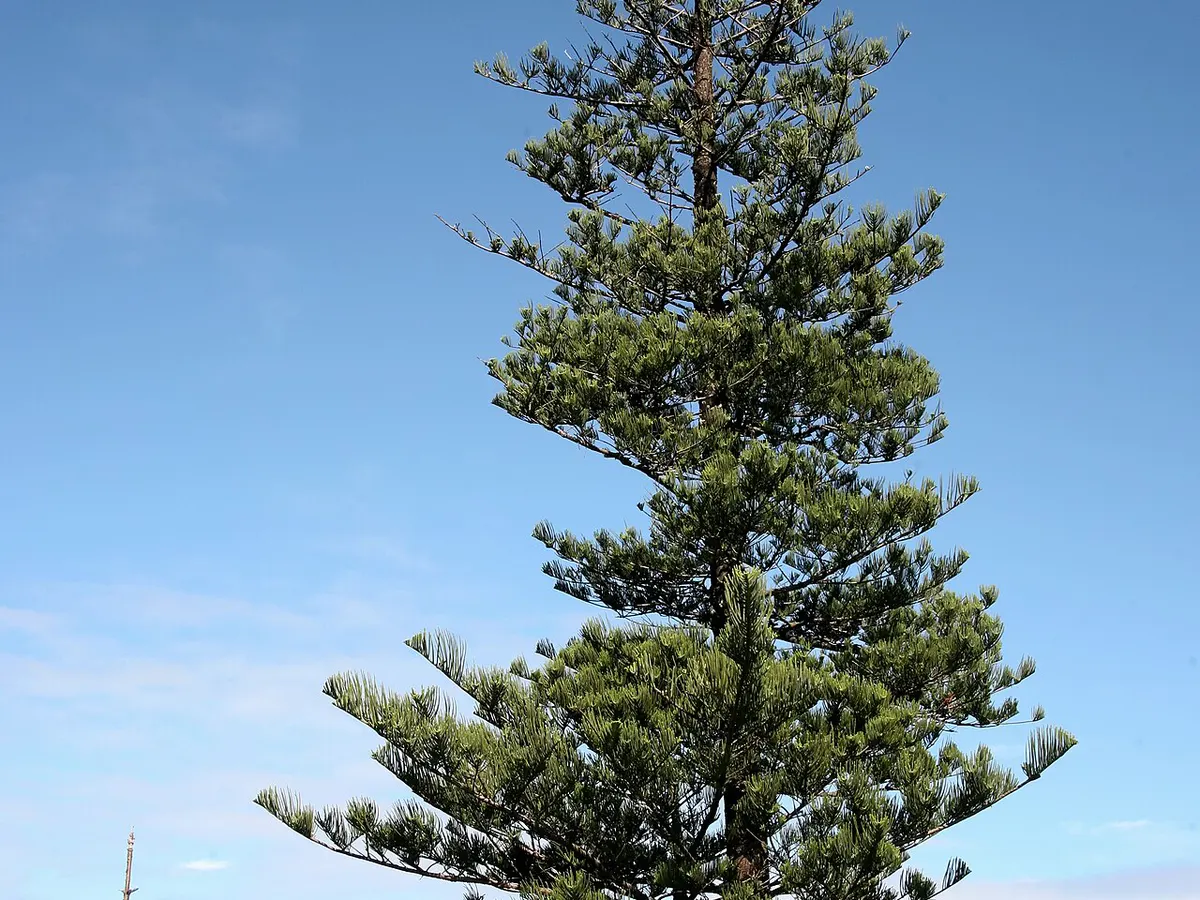
Photo: bertknot from scarborough, australia, CC BY-SA 2.0, via Wikimedia Commons
- Light
- Bright, indirect
- Water
- Water when the top 2–3 cm of soil are dry.
- Humidity
- Average
- Temperature
- 7–24 °C
- Care level
- Needs a little attention
- Pets
- Not known to be toxic to cats and dogs
How often to water Norfolk Island pine
About every 6 days in summer and every 11 days in winter. Water when the top 2–3 cm of soil are dry.
Roughly how often, in a medium pot (12–20 cm) in the light it likes. Smaller pots, brighter spots and warm balconies need water sooner; big pots and dim corners later.
- Spring every 7 days
- Summer every 6 days
- Autumn every 9 days
- Winter every 11 days
Worked out by LeafMinder’s schedule. In the app it then adapts to your home, from your “still damp” and “bone dry” answers.
Feeding and repotting
Feed about every 30 days from March to September, with a houseplant fertiliser at half strength. Not in the colder months. Check whether it needs a bigger pot every 36 months or so, ideally in spring.
Thirsty, or too wet?
- When it would like water
- The soil pulls away from the edge of the pot and the needles on the lower branches dull and start to brown. Water when the top 2–3 cm are dry, before the whole pot dries out, since branches lost to drought don't grow back.
- When it has had too much
- The branches droop, needles yellow and drop, and the soil stays wet for days. Let the top few centimetres dry before watering again, tip out water left in the saucer after about 15 minutes, and check that the pot drains freely.
Soil and pot
Use a slightly acidic, soil-based potting mix with some coarse sand or perlite for drainage, in a pot with a drainage hole. It grows slowly and is happy a little snug, so repot only every two to three years, in spring, when roots show at the surface or through the bottom. Handle the roots gently and keep the trunk at the same depth as before.
Common problems
- Brown lower branches
- A few old lower branches browning slowly is normal ageing. Many at once point to dry soil, too little light reaching the base, or hot, dry air. Try first: Cut dead branches cleanly at the trunk, water before the pot dries right through, and give it a brighter spot. Lost branches won't regrow, but the top keeps growing.
- Needles browning all over
- Very dry air, often from winter heating, or hot and cold draughts near vents and doors. Try first: Move it away from radiators and draughty doors, and raise the humidity with a humidifier or grouped plants. A cool, bright room at about 13–18 °C suits it in winter.
- The tree leans or grows lopsided
- Light coming from one side; it grows towards the window. Try first: Give the pot a quarter turn every week so all sides get light, and choose the brightest spot you have.
- Fine webbing between the needles
- Spider mites, which like warm, dry rooms. Try first: Rinse the tree gently in the shower, raise the humidity, and check again every few days for a few weeks.
- Sticky needles with small brown bumps
- Scale insects feeding on the sap; the sticky honeydew can turn black with sooty mould. Try first: Scrape the scales off with a fingernail or soft brush and wipe the branches with a damp cloth. Check weekly until no new ones appear.
Not sure what you’re seeing? A photo health check suggests possible causes. How health checks work
Propagation
It's hard to propagate at home. Many pots hold several seedlings growing together, and these can be separated carefully in spring, though the roots are delicate. A cutting only grows into an upright tree if it's taken from the very top, which ends the parent's upward growth; side branches can root but keep growing sideways. Growers raise new trees from fresh seed, which needs warmth and patience.
Varieties and relatives
- Cook pine: Araucaria columnaris, a close relative from New Caledonia, sometimes sold under the same name; it grows narrower and tends to lean as it gets older.
Questions people ask
How often should I water a Norfolk Island pine?
About every 6 days in summer, 7 in spring, 9 in autumn and 11 in winter, in a medium pot indoors. Check that the top 2–3 cm of soil are dry first, and don't let the pot dry out completely.
Is a Norfolk Island pine toxic to cats and dogs?
No. The ASPCA lists it as non-toxic to cats and dogs. Eating a lot of needles may still upset a pet's stomach, so it's worth discouraging chewing.
Why are the lower branches of my Norfolk Island pine turning brown?
A few old lower branches fading slowly is part of growing up. If many brown at once, check for dry soil, too little light or dry, heated air. Branches that die don't regrow, so steady watering and good light matter most.
Can I cut the top off my Norfolk Island pine to keep it smaller?
It's best not to. The tree grows upwards from a single tip at the top, and once that's cut it stops getting taller and loses its tidy, tiered shape. Indoors it grows slowly, so a spot with more headroom usually solves the problem.
Sources and licences
This care guide was written with AI and checked against the sources below.
- Care checked against: NC State Extension Gardener Plant Toolbox, New York Botanical Garden, Purdue University Consumer Horticulture, ASPCA Animal Poison Control, NDSU Extension, Stanford University Trees of Stanford.
- GBIF Backbone Taxonomy: other botanical names. Record. CC BY 4.0. GBIF Secretariat (2023). GBIF Backbone Taxonomy. Checklist dataset https://doi.org/10.15468/39omei accessed via GBIF.org on 2026-11-15.
Material from these sources keeps its own licence; LeafMinder’s copyright doesn’t extend to it, and the sources don’t endorse LeafMinder.
General guidance. Every home is different, so the soil is always the best guide. About this advice
From LeafMinder’s plant care guides: leafminder.eu/plants/norfolk-island-pine