



Mammillaria
Mammillaria spp. · Cactaceae · Cactus
Also called Pincushion cactus, Thimble cactus
Water when the soil is dry right through and give it as much sun as possible. A cool, dry winter rest encourages the ring of spring flowers.
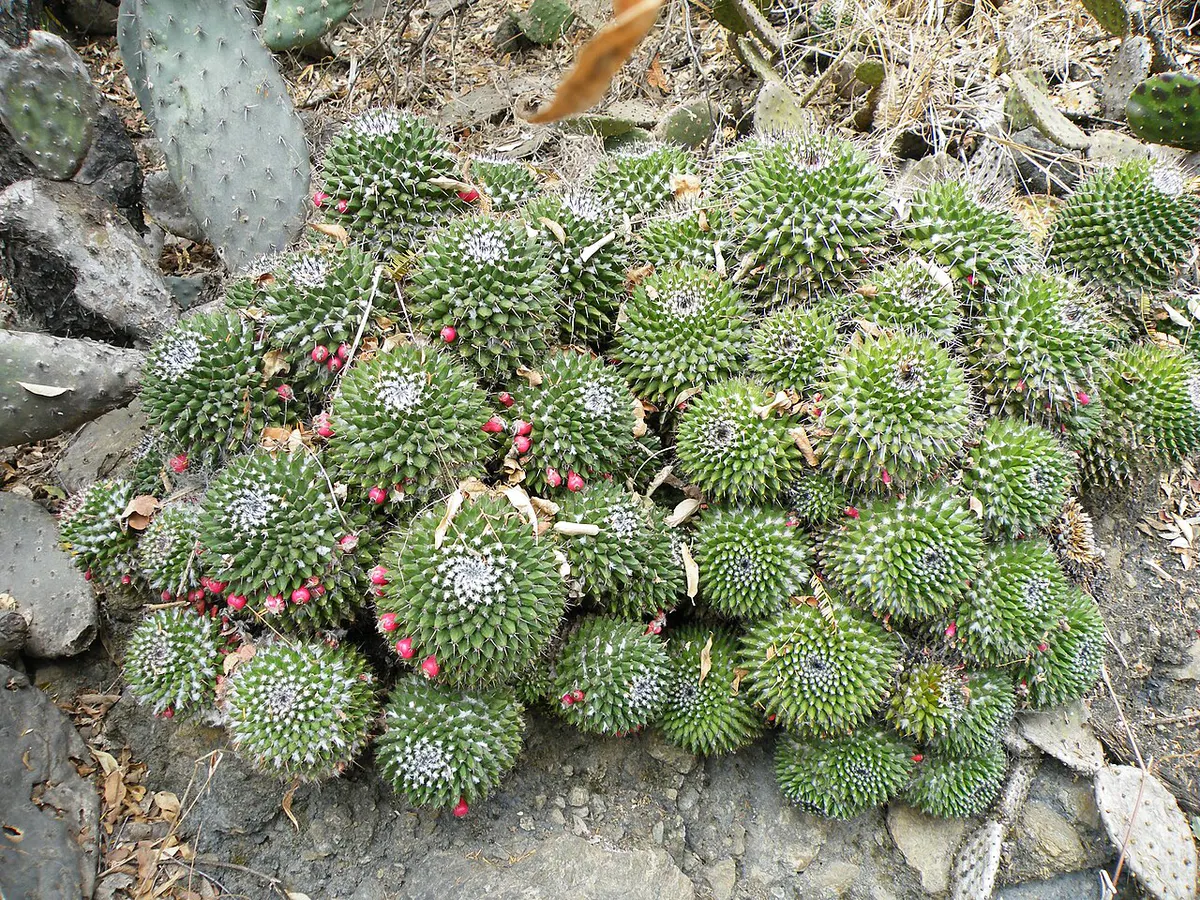
Photo: Amante Darmanin from Malta, CC BY 2.0, via Wikimedia Commons
- Light
- Direct sun
- Water
- Water only when the soil is dry right through.
- Humidity
- Normal room air is fine
- Temperature
- 5–35 °C
- Care level
- Easy-going, a good first plant
- Pets
- Not known to be toxic to cats and dogs
How often to water Mammillaria
About every 11 days in summer and every 36 days in winter. Water only when the soil is dry right through.
Roughly how often, in a medium pot (12–20 cm) in the light it likes. Smaller pots, brighter spots and warm balconies need water sooner; big pots and dim corners later.
- Spring every 12 days
- Summer every 11 days
- Autumn every 24 days
- Winter every 36 days
Worked out by LeafMinder’s schedule. In the app it then adapts to your home, from your “still damp” and “bone dry” answers.
Feeding and repotting
Feed about every 30 days from April to August, with a houseplant fertiliser at half strength. Not in the colder months. Check whether it needs a bigger pot every 36 months or so, ideally in spring.
Thirsty, or too wet?
- When it would like water
- The soil is dry right through and the pot feels light. After a long dry spell the stems look slightly shrunken or wrinkled, and the spaces between the tubercles deepen.
- When it has had too much
- The base turns soft, yellowish, brown or translucent, and heads may come loose from the clump. Stop watering, let the mix dry completely and check the roots for rot.
Soil and pot
Use a cactus mix with extra grit or coarse sand, so water runs straight through. A wide, shallow pot with a drainage hole suits most species, which spread into clumps. A layer of grit on top keeps the base of the plant dry. Repot about every three years in spring, when the clump reaches the rim.
Common problems
- No flowers in spring
- A warm winter or too little light. A cool, bright, nearly dry rest is what sets the ring of buds. Try first: From November to early March, keep it in a bright spot at about 7–12 °C with only occasional water, then give it full sun from spring.
- Soft, translucent or brown base
- Rot from soil that stays wet, especially in a cool room. Try first: Stop watering and let the pot dry right out. Remove rotting heads and replant healthy ones in fresh, dry, gritty mix.
- Tall, thin, pale growth leaning to the window
- Too little light. The new growth stretches and loses its compact shape. Try first: Move it to your sunniest window and build up direct sun gradually. New growth will be compact again.
- White cottony patches on the plant or the roots
- Mealybugs, including root mealybugs found when repotting. Many species also have natural white wool or hairs, which are healthy. Try first: Dab pests off with a cotton bud dipped in rubbing alcohol. If they are on the roots, wash the roots and repot in clean mix.
- Dull, speckled or rusty-looking skin with fine webbing
- Spider mites, which spread in warm, dry, still air. Try first: Rinse the plant with lukewarm water, keep it apart from other plants and repeat weekly until no new damage appears.
Not sure what you’re seeing? A photo health check suggests possible causes. How health checks work
Propagation
Most species form offsets around the base. In spring or summer, twist or cut one off, let it dry for a few days and set it on dry, gritty cactus mix, watering lightly after about a week. You can also sow the fine seed in spring on the surface of gritty mix, warm and bright under a clear cover; seedlings grow slowly but often flower within a few years.
Varieties and relatives
- Ladyfinger cactus: Mammillaria elongata: finger-shaped stems with golden spines that form dense clusters. Pale yellow flowers.
- Old lady cactus: Mammillaria hahniana: a round head covered in white hairs, with a ring of magenta flowers.
- Thimble cactus: Mammillaria vetula subsp. gracilis: small heads that drop off at a touch and root wherever they land.
- Rose pincushion: Mammillaria zeilmanniana: a small, clustering species that flowers readily with pink to violet blooms.
Questions people ask
How often should I water a mammillaria?
About every 11–12 days in spring and summer, about every three and a half weeks in autumn and about every five weeks in winter, in a medium pot indoors. Water only when the soil is dry right through; in a cool winter rest, a small drink is enough.
Is mammillaria toxic to cats and dogs?
Mammillaria isn't considered toxic to cats or dogs. The spines, some of them hooked, can still hurt a curious pet, so keep it out of reach.
Why isn't my mammillaria flowering?
Most need a cool, bright and nearly dry winter, around 7–12 °C, followed by full sun from spring. Kept warm all winter or in low light, they tend to grow without flowering. Flowers form in a ring around the top of the stem.
Is the white fluff on my mammillaria a pest?
Often it's natural: many species have white wool between the tubercles or white hairs over the whole plant. Mealybugs look like small, waxy, cotton-like blobs that move slowly and leave sticky residue; check them with a cotton bud.
Sources and licences
This care guide was written with AI and checked against the sources below.
- Care checked against: NC State Extension Gardener Plant Toolbox, ASPCA Animal Poison Control, Royal Horticultural Society.
General guidance. Every home is different, so the soil is always the best guide. About this advice
From LeafMinder’s plant care guides: leafminder.eu/plants/mammillaria