



Jade plant
Crassula ovata · Crassulaceae · Succulent
Also called Money plant, Jade tree, Crassula
Water only when the soil is dry right through and give it plenty of sun. Wrinkled leaves mean it is thirsty; soft, yellow ones mean too much water.
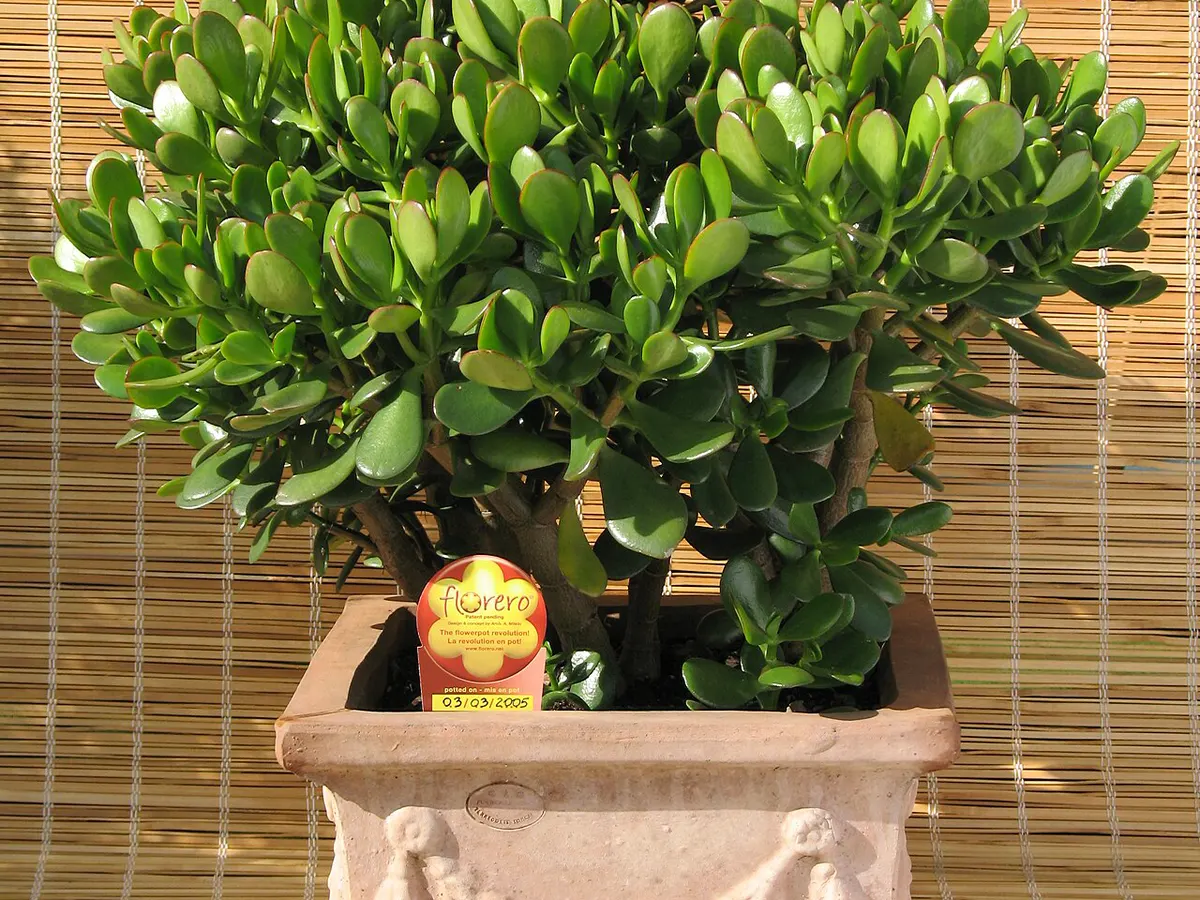
Photo: Arch. Attilio Mileto - attilio.mileto@florero.net, CC BY-SA 3.0, via Wikimedia Commons
- Light
- Direct sun
- Water
- Water only when the soil is dry right through.
- Humidity
- Normal room air is fine
- Temperature
- 7–30 °C
- Care level
- Easy-going, a good first plant
- Pets
- Not safe for cats and dogs
How often to water Jade plant
About every 11 days in summer and every 30 days in winter. Water only when the soil is dry right through.
Roughly how often, in a medium pot (12–20 cm) in the light it likes. Smaller pots, brighter spots and warm balconies need water sooner; big pots and dim corners later.
- Spring every 12 days
- Summer every 11 days
- Autumn every 21 days
- Winter every 30 days
Worked out by LeafMinder’s schedule. In the app it then adapts to your home, from your “still damp” and “bone dry” answers.
Feeding and repotting
Feed about every 30 days from April to September, with a houseplant fertiliser at half strength. Not in the colder months. Check whether it needs a bigger pot every 36 months or so, ideally in spring.
Thirsty, or too wet?
- When it would like water
- The leaves lose their plumpness, look wrinkled or slightly puckered and may feel soft but not mushy, and the soil is dry right through. A deep watering firms them up again within a few days.
- When it has had too much
- Leaves turn yellow, go soft or translucent and drop easily, and the stem may darken at the base. Stop watering until the soil is dry right through; if the stem is soft, cut healthy pieces to root and repot what's firm into dry, gritty mix.
Soil and pot
A cactus and succulent mix suits it, or houseplant compost with a generous amount of grit or perlite added. Use a pot with a drainage hole; unglazed clay dries faster and its weight keeps an older, top-heavy plant from tipping. Jade is happy root-bound for years, so repot only about every three years, in spring, or when it becomes top-heavy. Leave it dry for about a week afterwards.
Common problems
- Soft, yellow leaves dropping
- Too much water or soil that drains poorly, which can lead to root and stem rot. Try first: Let the soil dry right through before watering again and make sure it drains freely. If roots or stem are soft, take cuttings from healthy shoots.
- Wrinkled, shrivelled leaves
- Thirst: the leaves are drawing on their stored water. Try first: Water deeply until it runs from the hole, then wait until the soil is dry again. The leaves should plump up within a few days.
- Leggy stems with gaps between the leaves
- Too little light, sometimes together with too much feeding. Try first: Give it a sunny window with at least four hours of direct sun. In spring, cut leggy stems back just above a pair of leaves to make it bushier.
- White cottony clumps where leaves meet the stem
- Mealybugs, the most common pest on jade. Try first: Dab them off with a cotton bud dipped in rubbing alcohol and keep checking for a few weeks. Avoid insecticidal soap, which can damage jade leaves.
- Leaves dropping in winter
- Cold draughts, an icy window pane, or soil left wet in cool weather. Try first: Keep it above 7 °C with its leaves away from cold glass, and water much less in winter.
Not sure what you’re seeing? A photo health check suggests possible causes. How health checks work
Propagation
One of the easiest succulents to root. In spring or summer, cut a stem piece 5–10 cm long or twist off a whole, healthy leaf, and let the cut end dry for a few days until it calluses. Then set it in barely moist succulent mix, somewhere bright but out of hot sun, and water lightly once roots form after a few weeks. Stem cuttings make a sizeable plant much faster than single leaves.
Varieties and relatives
- 'Gollum': Leaves rolled into tubes with a small reddish hollow at the tip. The same easy care.
- 'Hummel's Sunset': Leaves flush yellow, orange and red in strong light, and fade back to green in shade.
- Silver jade plant (Crassula arborescens): A close relative with round, blue-grey leaves edged in red. Slower, and just as fond of sun.
- Elephant bush (Portulacaria afra): Often sold as dwarf jade, but a different plant with smaller leaves on reddish stems. Similar care.
Questions people ask
How often should I water a jade plant?
In a medium pot indoors, about every 12 days in spring, every 11 days in summer, every three weeks in autumn and about once a month in winter. Only water when the soil is dry right through, then water thoroughly.
Is a jade plant toxic to cats and dogs?
Yes. The ASPCA lists jade as toxic to cats and dogs; eating it can cause vomiting, lethargy and wobbliness. Keep it out of reach, and call your vet if a pet chews it.
Why are my jade plant's leaves falling off?
Usually water: too much makes leaves soft and yellow before they fall, while long dry spells make them wrinkle and drop. Cold draughts and sudden moves can also cause leaf drop. Check the soil and the roots before changing anything else.
Will my jade plant flower indoors?
It can, once mature. Flowers form in late autumn or winter after several weeks of cool nights around 10–13 °C, long dark nights and drier soil. A plant kept warm and lit in the evenings rarely blooms.
Sources and licences
This care guide was written with AI and checked against the sources below.
- Care checked against: NC State Extension Gardener Plant Toolbox, Penn State Extension, Clemson Cooperative Extension Home & Garden Information Center, University of Wisconsin-Madison Extension, ASPCA Animal Poison Control.
- GBIF Backbone Taxonomy: other botanical names. Record. CC BY 4.0. GBIF Secretariat (2023). GBIF Backbone Taxonomy. Checklist dataset https://doi.org/10.15468/39omei accessed via GBIF.org on 2026-11-15.
Material from these sources keeps its own licence; LeafMinder’s copyright doesn’t extend to it, and the sources don’t endorse LeafMinder.
General guidance. Every home is different, so the soil is always the best guide. About this advice
From LeafMinder’s plant care guides: leafminder.eu/plants/jade-plant