



Christmas cactus
Schlumbergera × buckleyi · Cactaceae · Cactus
Also called Holiday cactus, Thanksgiving cactus, Schlumbergera
Unlike desert cacti it likes only the top few centimetres to dry, not the whole pot. Cool nights and shorter days in autumn trigger the buds; avoid moving it once they form.
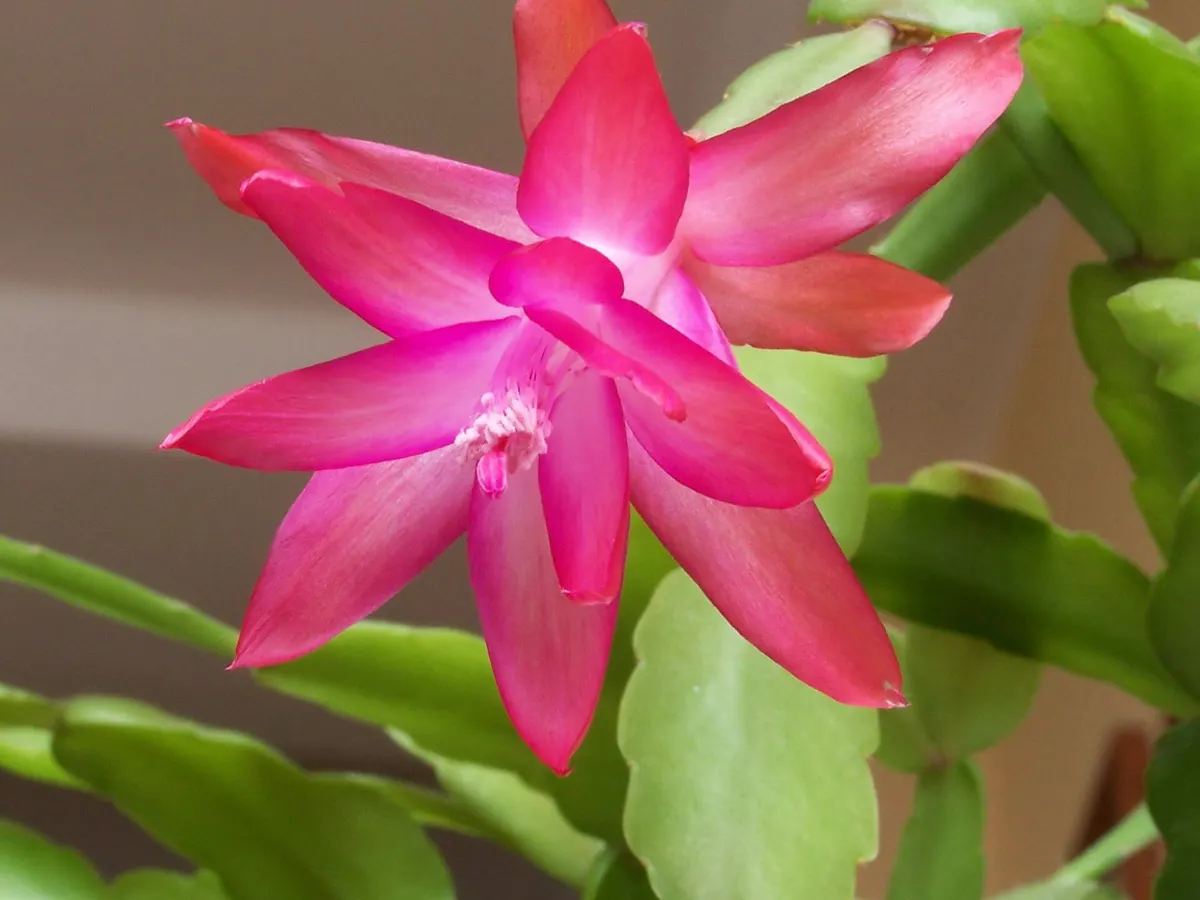
Photo: Lestat (Jan Mehlich); derivative work by Peter coxhead, CC BY-SA 2.5, via Wikimedia Commons
- Light
- Bright, indirect
- Water
- Water when the top 2–3 cm of soil are dry.
- Humidity
- Average
- Temperature
- 12–27 °C
- Care level
- Easy-going, a good first plant
- Pets
- Not known to be toxic to cats and dogs
How often to water Christmas cactus
About every 6 days in summer and every 9 days in winter. Water when the top 2–3 cm of soil are dry.
Roughly how often, in a medium pot (12–20 cm) in the light it likes. Smaller pots, brighter spots and warm balconies need water sooner; big pots and dim corners later.
- Spring every 7 days
- Summer every 6 days
- Autumn every 8 days
- Winter every 9 days
Worked out by LeafMinder’s schedule. In the app it then adapts to your home, from your “still damp” and “bone dry” answers.
Feeding and repotting
Feed about every 30 days from April to August, with a houseplant fertiliser at half strength. Not in the colder months. Check whether it needs a bigger pot every 36 months or so, ideally in spring.
Thirsty, or too wet?
- When it would like water
- The top 2–3 cm of soil are dry and the flat segments look thin and slightly wrinkled. It is a forest cactus, so it shouldn't stay bone dry for long the way a desert cactus can.
- When it has had too much
- Segments turn limp and soft, may break off at the joints, and the base can start to rot. Let the top few centimetres dry before watering again and make sure no water stands in the pot or saucer.
Soil and pot
Use a well-drained potting mix; an all-purpose mix with some perlite or fine bark works, and a special cactus mix isn't needed. Choose a pot with a drainage hole. It flowers best when a little snug, so repot only every three years or so, in late winter or spring after flowering, when roots come out of the bottom or the soil dries within a day or two.
Common problems
- Buds dropping before they open
- A move or turn of the pot, draughts, sudden temperature changes, or soil that was too dry or too wet while the buds formed. Try first: Choose its spot before buds appear and leave it there until the first flowers open. Keep the soil evenly, lightly moist while it is in bud.
- No flowers at all
- Warm rooms or evening lamplight in autumn, which stop the plant from setting buds. Try first: From early autumn, give it cool nights of about 13–16 °C and at least 12–14 hours of real darkness each night for about six weeks, with bright light by day.
- Limp, soft segments
- Overwatering and root rot, especially in winter when growth slows. Try first: Check the roots; trim off any brown, mushy ones and repot into fresh, free-draining mix. Water only once the top 2–3 cm are dry.
- Pale, bleached-looking segments
- Too much direct sun, especially hot summer sun through glass. Try first: Move it to bright, indirect light, such as an east window or a little back from a south-facing one.
- Brown bumps or white fluff at the joints
- Scale insects or mealybugs, which feed on the sap. Try first: Scrape or dab them off with a cotton swab dipped in alcohol and check again every week until none come back.
Not sure what you’re seeing? A photo health check suggests possible causes. How health checks work
Propagation
It is one of the easiest plants to share. In late spring or early summer, twist off a piece of 2–5 segments, let it dry overnight, then push the lowest segment about 2–3 cm deep, right way up, into moist perlite, sand or a free-draining mix. Keep it in bright, indirect light and water lightly when the mix starts to dry; roots form in three to eight weeks.
Varieties and relatives
- Thanksgiving cactus: Its segments have pointed teeth along the edges, its pollen is yellow and it flowers a few weeks earlier, from November. Many plants sold as Christmas cactus are this one.
- Easter cactus: Rounded segments with bristles at the tips and flat, star-shaped flowers in spring; it needs a longer cool, dark spell to set buds.
- Dancing bones cactus: A related forest cactus from Brazil with thin, bottle-shaped segments and small yellow-orange flowers.
Questions people ask
How often should I water a Christmas cactus?
About every 6–7 days in spring and summer and every 8–9 days in autumn and winter, in a medium pot indoors. Check that the top 2–3 cm of soil are dry first, and keep the soil lightly moist while it is in bud.
Is Christmas cactus toxic to cats and dogs?
No. The ASPCA lists Christmas cactus as non-toxic to cats and dogs. Eating a lot of it can still cause a mild stomach upset, so it is worth keeping it a little out of reach.
How do I get my Christmas cactus to flower again?
Give it shorter, cooler days in autumn: nights around 13–16 °C and at least 12–14 hours of darkness, away from lamps, for about six weeks. Once buds show, keep it in the same spot with the soil lightly moist.
Is it a Christmas cactus or a Thanksgiving cactus?
Look at the segment edges. The Christmas cactus has rounded, scalloped edges and purplish-brown pollen, while the Thanksgiving cactus has pointed teeth, yellow pollen and flowers a few weeks earlier. Care is the same for both.
Sources and licences
This care guide was written with AI and checked against the sources below.
- Care checked against: NC State Extension Gardener Plant Toolbox, Iowa State University Extension and Outreach, Penn State Extension, ASPCA Animal Poison Control.
- GBIF Backbone Taxonomy: other botanical names. Record. CC BY 4.0. GBIF Secretariat (2023). GBIF Backbone Taxonomy. Checklist dataset https://doi.org/10.15468/39omei accessed via GBIF.org on 2026-11-15.
Material from these sources keeps its own licence; LeafMinder’s copyright doesn’t extend to it, and the sources don’t endorse LeafMinder.
General guidance. Every home is different, so the soil is always the best guide. About this advice
From LeafMinder’s plant care guides: leafminder.eu/plants/christmas-cactus