



Chinese evergreen (Aglaonema commutatum)
Aglaonema commutatum · Araceae · Leafy green plant
Also called Aglaonema
Let the top few centimetres dry before watering and keep it away from cold draughts. Red and pink varieties need a little more light than the green ones.
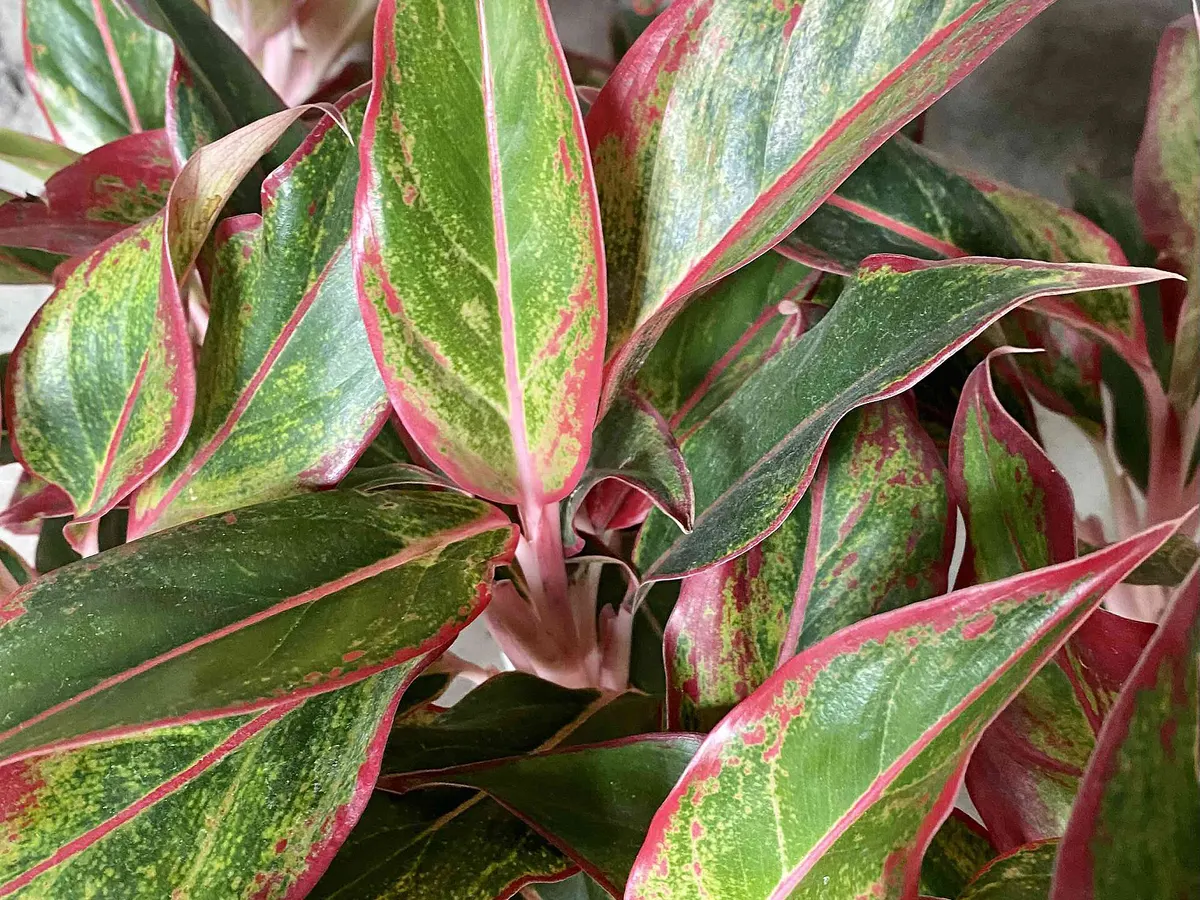
Photo: Aritra Bhawani, CC BY-SA 4.0, via Wikimedia Commons
- Light
- Medium, a few steps from a window · copes with less
- Water
- Water when the top 2–3 cm of soil are dry.
- Humidity
- Average
- Temperature
- 16–30 °C
- Care level
- Easy-going, a good first plant
- Pets
- Not safe for cats and dogs
How often to water Chinese evergreen
About every 9 days in summer and every 15 days in winter. Water when the top 2–3 cm of soil are dry.
Roughly how often, in a medium pot (12–20 cm) in the light it likes. Smaller pots, brighter spots and warm balconies need water sooner; big pots and dim corners later.
- Spring every 10 days
- Summer every 9 days
- Autumn every 12 days
- Winter every 15 days
Worked out by LeafMinder’s schedule. In the app it then adapts to your home, from your “still damp” and “bone dry” answers.
Feeding and repotting
Feed about every 30 days from March to September, with a houseplant fertiliser at half strength. Not in the colder months. Check whether it needs a bigger pot every 24 months or so, ideally in spring.
Thirsty, or too wet?
- When it would like water
- The leaves lose their firmness and start to droop a little, and the pot feels light when you lift it. The top few centimetres of soil are dry to the touch.
- When it has had too much
- Lower leaves turn yellow one after another and the stems near the soil feel soft. Let the top few centimetres dry before watering again, and make sure no water is left standing in the saucer.
Soil and pot
A general houseplant mix with some extra organic matter suits it, with a handful of perlite if the mix feels heavy. Use a pot with drainage holes, since roots left sitting in water rot. It grows slowly, so a bigger pot is only needed every two years or so: roots circling the bottom or poking out of the holes, and water running straight through, are the signs. Go up one size, in spring.
Common problems
- Yellow lower leaves
- Soil that stays wet for days, or simply an old leaf reaching the end of its life when it is only one at a time. Try first: Check the soil before each watering and let the top few centimetres dry. Empty the saucer after watering and remove the old leaf at the base.
- Dark, dull or glassy patches after a cold spell
- Chill damage. It is sensitive to temperatures below about 10 °C and to cold draughts from windows and doors. Try first: Move it away from cold glass and draughts and keep it above 16 °C. Trim the damaged leaves once new growth appears.
- Brown, burnt-looking leaf edges
- Too much fertiliser building up in the soil, or very dry air near a radiator. Try first: Water the pot through thoroughly to rinse out salts, then feed at half strength, monthly from spring to early autumn only.
- Red or pink leaves fading and stems leaning
- Not enough light. Coloured varieties need more light than the plain green ones. Try first: Move it closer to a bright window, out of direct sun. Green varieties cope with less light.
- White cottony tufts where leaves meet the stem
- Mealybugs, which hide in the folds of the leaf bases. Scale and spider mites also turn up now and then. Try first: Wipe them off with a cotton bud dipped in rubbing alcohol and check again every few days. Treat with insecticidal soap if they keep coming back.
Not sure what you’re seeing? A photo health check suggests possible causes. How health checks work
Propagation
The easiest way is division: when you repot in spring, ease the clump apart into sections that each have roots and a few leaves, and pot them up separately. A tall, bare stem can also be cut back; the top part roots in water or moist potting mix in a warm, bright spot, and the old stem often sprouts again. Air layering works too but takes longer.
Varieties and relatives
- Aglaonema commutatum 'Maria': Dark green leaves with silvery-grey patches. One of the most shade-tolerant forms.
- Red and pink hybrids (such as 'Red Emerald'): Leaves splashed or edged with red or pink. They keep their colour only with brighter light.
- Aglaonema modestum: Plain green, glossy leaves. A very old houseplant that copes with dim corners.
- Aglaonema pictum 'Tricolor': Camouflage pattern in three shades of green and silver. It likes a little more light than most.
Questions people ask
How often should I water a Chinese evergreen?
About every 9–10 days in spring and summer, every 12 days or so in autumn and about every two weeks in winter, in a medium pot indoors. Check that the top few centimetres of soil are dry first.
Is Chinese evergreen toxic to cats and dogs?
Yes. The leaves and stems contain calcium oxalate crystals that irritate the mouth and can cause drooling, pawing at the mouth and vomiting. Keep it out of reach and call a vet if a pet chews it.
Can a Chinese evergreen live in low light?
The plain green and silver-grey kinds cope well with low light, such as a north window or a spot further into the room. Red and pink kinds fade and grow leggy there, so give them bright, indirect light.
Why are my Chinese evergreen's leaves turning yellow?
One old leaf at a time is normal. Several at once usually points to soil staying wet or to cold, so check that the pot drains, let the top dry between waterings and keep it away from cold draughts.
Sources and licences
This care guide was written with AI and checked against the sources below.
General guidance. Every home is different, so the soil is always the best guide. About this advice
From LeafMinder’s plant care guides: leafminder.eu/plants/chinese-evergreen