



Burro's tail
Sedum morganianum · Crassulaceae · Succulent
Also called Donkey's tail, Sedum
Water when the soil is dry right through and hang it where it will not be brushed, as the leaves fall off at a touch. Fallen leaves can be laid on soil to root.
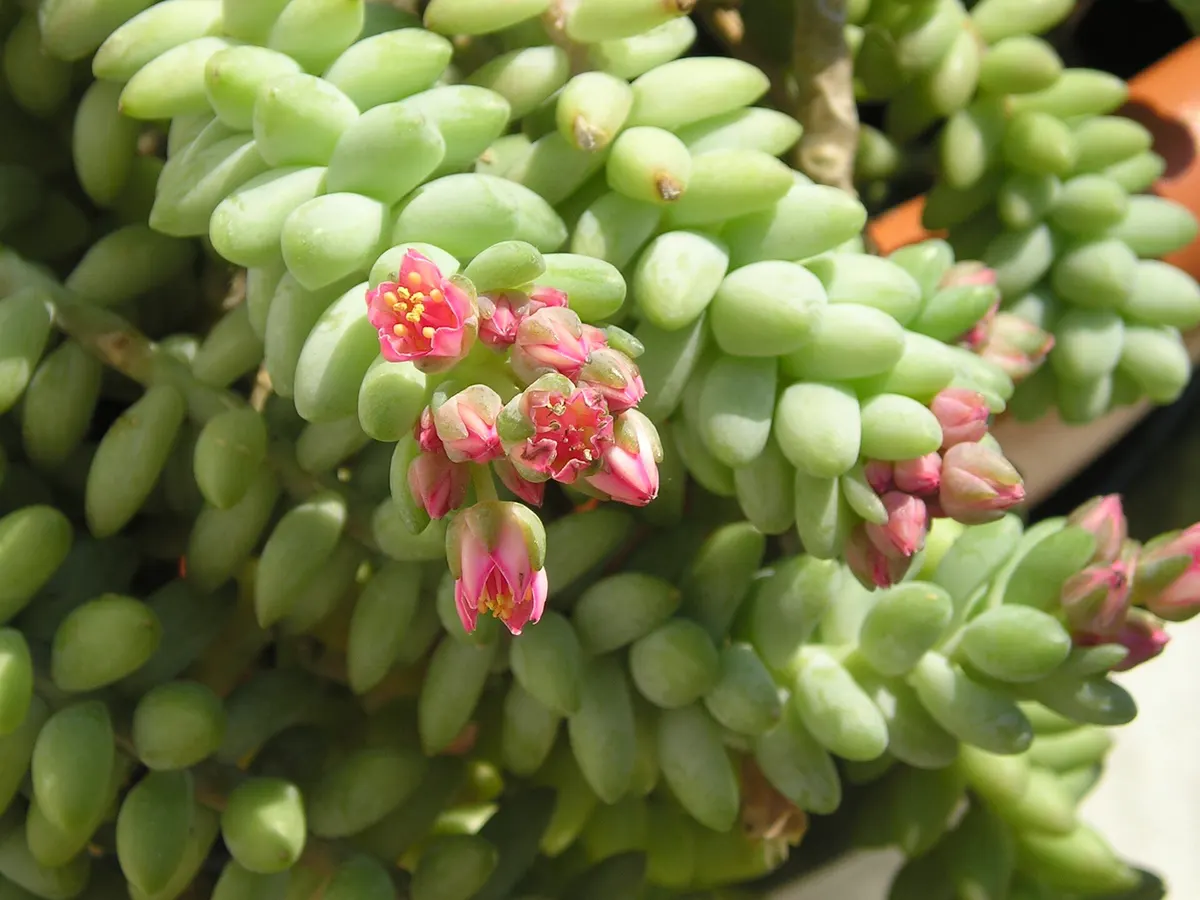
Photo: Morningdew51 at English Wikipedia, CC BY-SA 3.0, via Wikimedia Commons
- Light
- Direct sun
- Water
- Water only when the soil is dry right through.
- Humidity
- Normal room air is fine
- Temperature
- 7–30 °C
- Care level
- Easy-going, a good first plant
- Pets
- Not known to be toxic to cats and dogs
How often to water Burro's tail
About every 11 days in summer and every 30 days in winter. Water only when the soil is dry right through.
Roughly how often, in a medium pot (12–20 cm) in the light it likes. Smaller pots, brighter spots and warm balconies need water sooner; big pots and dim corners later.
- Spring every 12 days
- Summer every 11 days
- Autumn every 21 days
- Winter every 30 days
Worked out by LeafMinder’s schedule. In the app it then adapts to your home, from your “still damp” and “bone dry” answers.
Feeding and repotting
Feed about every 30 days from April to September, with a houseplant fertiliser at half strength. Not in the colder months. Check whether it needs a bigger pot every 36 months or so, ideally in spring.
Thirsty, or too wet?
- When it would like water
- The plump leaves look slightly wrinkled or less full, and the soil is dry right through. Water thoroughly, let it drain, then leave it until the pot is dry again.
- When it has had too much
- Leaves turn soft, yellowish or see-through and fall in numbers, and the base of the stems may darken. Stop watering, let the soil dry completely, and if the roots have rotted, root healthy stem tips in fresh gritty mix.
Soil and pot
Use a cactus and succulent mix, or a houseplant mix with plenty of perlite, pumice or fine gravel; sand on its own can clog the mix. A hanging pot or basket with drainage holes shows off the trailing stems and keeps them away from passing hands. Repot only in spring when it has filled the pot, since moving it knocks off leaves, and wait about a week before watering so damaged roots can heal.
Common problems
- Leaves fall off at the slightest touch
- Normal for this plant, as the leaves are attached very loosely. Many falling without a touch, while soft, points to too much water. Try first: Hang it out of the way and handle it as little as possible. Lay fallen firm leaves on dry mix; many will root.
- Soft, mushy leaves and dark stems
- Overwatering and root rot, the most common problem. Try first: Let the soil dry right through before watering again. Cut away rotten parts and reroot healthy stem tips if the base has collapsed.
- Stretched stems with gaps between the leaves
- Too little light. Try first: Move it to the sunniest window you have; let it get used to the strongest sun gradually.
- Leaves turn pale yellow
- A sudden move into strong sun bleaches leaves that are not used to it. Try first: Introduce stronger sun over a week or two, especially when it moves outdoors for the summer.
- White cottony patches on the stems
- Mealybugs, the pest seen most often on burro's tail. Try first: Dab them off gently with a cotton bud dipped in rubbing alcohol, and check again every week.
Not sure what you’re seeing? A photo health check suggests possible causes. How health checks work
Propagation
Stem cuttings are easiest. In spring or summer, cut a piece several centimetres long, strip the leaves from the lowest few centimetres, let the cut end dry for a day or two, then push it into dry, gritty mix and water lightly once it is anchored. Long cuttings may need support. Fallen leaves also root when laid on the mix, but more slowly, and rooting can take from several weeks to a few months.
Varieties and relatives
- 'Burrito': Shorter stems with smaller, rounder, bright green leaves; whether it is a separate species, a cultivar or a hybrid is unclear.
- Sedum pachyphyllum: Upright stems with club-shaped, blue-green leaves, often red-tipped in strong light, rather than trailing ropes.
- Sedum clavatum: Low rosettes of plump, pale blue-grey leaves; it grows into a small mound rather than trailing.
Questions people ask
How often should I water a burro's tail?
About every 11–12 days in spring and summer, every three weeks in autumn and about once a month in winter, in a medium pot indoors. Always check first that the soil is dry right through.
Is burro's tail toxic to cats and dogs?
No, it is listed as non-toxic to cats and dogs. Eating a lot of any plant can still upset a pet's stomach, and fallen leaves are easy for pets to pick up, so a hanging spot is a good idea.
Why is my burro's tail dropping leaves?
Losing a few when it is brushed is normal, as the leaves come off very easily. If many fall on their own or look soft or wrinkled, check the soil: soft leaves point to too much water, wrinkled ones to too little.
Does burro's tail flower indoors?
Rarely. Mature plants can bear pink to red flowers at the stem tips in summer, usually after a cooler winter at about 10–20 °C and a summer spent outdoors.
Sources and licences
This care guide was written with AI and checked against the sources below.
General guidance. Every home is different, so the soil is always the best guide. About this advice
From LeafMinder’s plant care guides: leafminder.eu/plants/burros-tail