



Bunny ears cactus
Opuntia microdasys · Cactaceae · Cactus
Also called Angel's wings, Polka dot cactus, Opuntia
Water only when the soil is dry right through and keep it almost dry in winter. The fluffy dots are fine barbed bristles that lodge in skin, so handle it with thick gloves or folded paper.
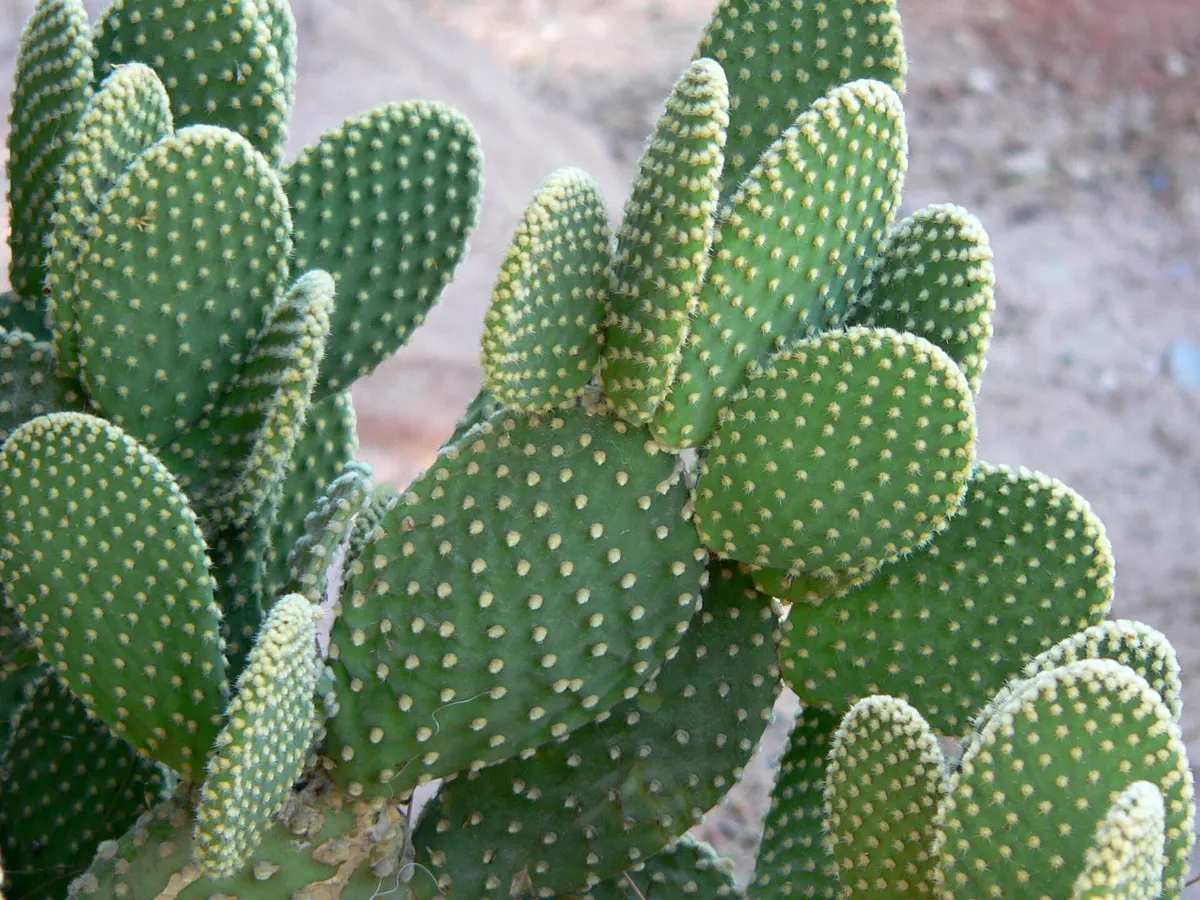
Photo: Stan Shebs, CC BY-SA 3.0, via Wikimedia Commons
- Light
- Direct sun
- Water
- Water only when the soil is dry right through.
- Humidity
- Normal room air is fine
- Temperature
- 5–35 °C
- Care level
- Easy-going, a good first plant
- Pets
- Not known to be toxic to cats and dogs
How often to water Bunny ears cactus
About every 11 days in summer and every 36 days in winter. Water only when the soil is dry right through.
Roughly how often, in a medium pot (12–20 cm) in the light it likes. Smaller pots, brighter spots and warm balconies need water sooner; big pots and dim corners later.
- Spring every 12 days
- Summer every 11 days
- Autumn every 24 days
- Winter every 36 days
Worked out by LeafMinder’s schedule. In the app it then adapts to your home, from your “still damp” and “bone dry” answers.
Feeding and repotting
Feed about every 30 days from April to August, with a houseplant fertiliser at half strength. Not in the colder months. Check whether it needs a bigger pot every 36 months or so, ideally in spring.
Thirsty, or too wet?
- When it would like water
- The soil is dry right through and the pot feels light. After a long dry spell the pads lose their firmness and look slightly wrinkled or thin.
- When it has had too much
- Pads near the soil turn soft, yellow, brown or black and may drop. Stop watering, let the pot dry completely and check the roots for rot.
Soil and pot
Use a free-draining cactus mix, with extra grit or coarse sand if it feels heavy. Choose a pot with a drainage hole; terracotta helps it dry between waterings. Repot about every three years in spring, one size up, when the pads crowd the rim or roots fill the pot. Hold it with folded newspaper or thick gloves, as the fluffy dots are barbed bristles.
Common problems
- Soft, brown or black pads at the base
- Rot from soil that stays wet, most often in a cold room in winter. Try first: Stop watering and let the pot dry fully. If the rot spreads, remove healthy upper pads and root them in fresh, dry cactus mix.
- Thin, narrow, pale new pads
- Too little light. The new pads stretch towards the window. Try first: Move it to your sunniest spot, increasing direct sun over a week or two. Stretched pads won't thicken, but you can remove them in spring and root them.
- Wrinkled, deflated pads
- The soil has been dry for a long time, or damaged roots can't take up water. Try first: If the soil is dry right through, water thoroughly and let it drain. If it's damp, check the roots before watering again.
- White fluffy spots or small brown bumps
- Mealybugs or scale insects, which settle between the bristle tufts. Try first: Pick them off with tweezers or a cotton bud dipped in rubbing alcohol, keeping your hands clear of the bristles. Check again every few days.
- Pale or tan scorched patches after a move
- Sunscald when the plant goes suddenly from a dim spot into strong sun. Try first: Move it into stronger light gradually over one to two weeks. Marked patches stay, but new pads grow normally.
Not sure what you’re seeing? A photo health check suggests possible causes. How health checks work
Propagation
Bunny ears roots easily from pads. In spring or early summer, twist or cut off a healthy pad, holding it with tongs or folded paper, and leave it to dry for a few days until the cut seals. Stand it upright, cut end down, about 2 cm deep in dry cactus mix, and give a light watering after a week or so. New roots form within a few weeks.
Varieties and relatives
- White bunny ears: A form with white bristle tufts instead of golden ones, often sold as 'Albata' or var. albispina. Same care.
- Cinnamon cactus (Opuntia rufida): A close relative with reddish-brown bristle tufts and greyer pads. It likes the same sun and dry winter.
- Drooping prickly pear: A larger relative with long, glossy pads that branch into a sprawling shrub. It needs more room.
- Indian fig: The prickly pear grown for its fruit. Much bigger pads and long-term size; best for a large pot or a frost-free terrace.
Questions people ask
How often should I water a bunny ears cactus?
About every 11–12 days in spring and summer, about every three and a half weeks in autumn and about every five weeks in winter, in a medium pot indoors. Water only when the soil is dry right through, and keep it almost dry in a cool winter spot.
Is bunny ears cactus toxic to cats and dogs?
It isn't considered toxic to cats or dogs. The fine barbed bristles can still lodge in a curious pet's mouth or paws, so keep it out of reach.
How do I get bunny ears bristles out of my skin?
Don't rub the spot, which pushes the bristles in further. Pull out the ones you can see with tweezers, then press sticky tape on the skin and lift it off to catch the finest ones. If the skin stays irritated, ask a doctor or pharmacist.
Will my bunny ears cactus flower indoors?
Mature plants can bear pale yellow flowers in summer, but it's uncommon indoors. Your best chance is plenty of direct sun in summer and a cool, nearly dry winter rest.
Sources and licences
This care guide was written with AI and checked against the sources below.
- Care checked against: NC State Extension Gardener Plant Toolbox, ASPCA Animal Poison Control, Royal Horticultural Society.
- GBIF Backbone Taxonomy: other botanical names. Record. CC BY 4.0. GBIF Secretariat (2023). GBIF Backbone Taxonomy. Checklist dataset https://doi.org/10.15468/39omei accessed via GBIF.org on 2026-11-15.
Material from these sources keeps its own licence; LeafMinder’s copyright doesn’t extend to it, and the sources don’t endorse LeafMinder.
General guidance. Every home is different, so the soil is always the best guide. About this advice
From LeafMinder’s plant care guides: leafminder.eu/plants/bunny-ears-cactus