



Bird's nest fern
Asplenium nidus · Aspleniaceae · Fern
Also called Asplenium, Crispy wave fern
Water the soil around the plant rather than into the central rosette, which can rot. Let the surface dry slightly between waterings.
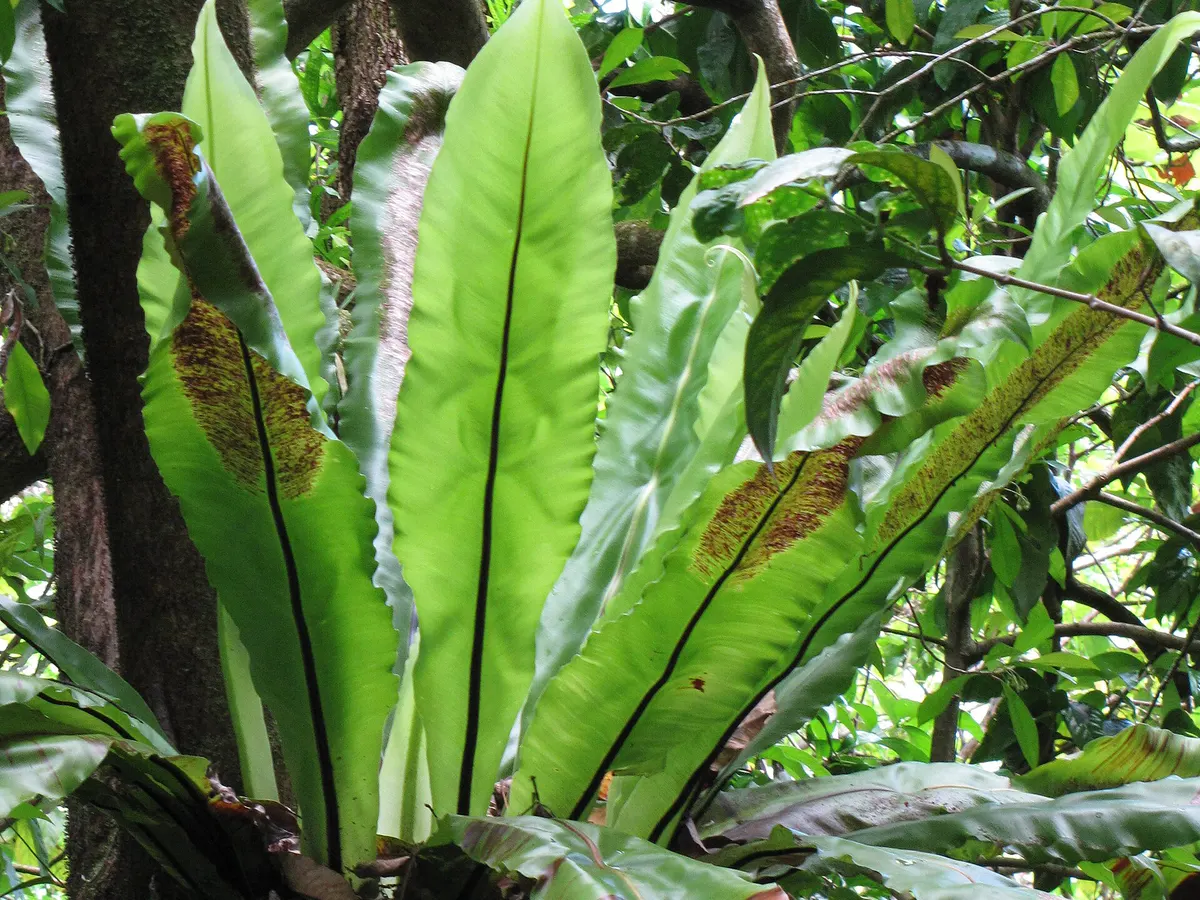
Photo: Forest and Kim Starr, CC BY 3.0 US, via Wikimedia Commons
- Light
- Medium, a few steps from a window · copes with less
- Water
- Water when the top 2–3 cm of soil are dry.
- Humidity
- Likes humid air
- Temperature
- 16–27 °C
- Care level
- Easy-going, a good first plant
- Pets
- Not known to be toxic to cats and dogs
How often to water Bird's nest fern
About every 5 days in summer and every 7 days in winter. Water when the top 2–3 cm of soil are dry.
Roughly how often, in a medium pot (12–20 cm) in the light it likes. Smaller pots, brighter spots and warm balconies need water sooner; big pots and dim corners later.
- Spring every 6 days
- Summer every 5 days
- Autumn every 6 days
- Winter every 7 days
Worked out by LeafMinder’s schedule. In the app it then adapts to your home, from your “still damp” and “bone dry” answers.
Feeding and repotting
Feed about every 30 days from March to September, with a houseplant fertiliser at half strength. Not in the colder months. Check whether it needs a bigger pot every 24 months or so, ideally in spring.
Thirsty, or too wet?
- When it would like water
- The top few centimetres of mix feel dry, the pot feels light and the fronds lose some of their gloss, with the edges starting to curl. Water around the edge of the pot until it drains.
- When it has had too much
- Yellowing fronds and a soft, brown centre mean the roots or the crown are staying wet. Let the top of the mix dry before the next watering, keep water out of the central rosette and empty the saucer.
Soil and pot
Use a light, airy mix rich in organic matter, such as a peat-free houseplant or fern mix with some orchid bark or perlite added. The pot needs drainage holes and can stay fairly small, because the roots are modest for the size of the plant. Repot about every two years in spring, when roots circle the pot or the plant becomes top-heavy.
Common problems
- Brown, crispy frond edges
- Dry air from heating, or the mix drying out completely. Try first: Raise humidity with a pebble tray or by grouping plants, keep it away from radiators and water before the mix dries right through.
- Mushy, brown centre
- Water collecting in the central rosette, where the new fronds grow. Try first: Water the mix around the plant, never into the middle. A rotted centre rarely recovers, so this is mostly about prevention.
- Pale, yellow-bleached fronds
- Too much direct sun. Try first: Move it out of direct sun to medium or bright indirect light, such as near a north or east window.
- Scattered brown bumps on the fronds
- Scale insects. Neat brown lines along the veins underneath are spores, which are normal. Try first: Scrape the bumps off gently with a soft cloth or fingernail and check again every week.
- Brown patches after cleaning the leaves
- The fronds are delicate and bruise when rubbed or coated with leaf shine. Try first: Dust them only with a soft, damp cloth or a lukewarm shower, and skip leaf shine sprays.
Not sure what you’re seeing? A photo health check suggests possible causes. How health checks work
Propagation
A bird's nest fern grows from a single crown, so it can't be divided or grown from cuttings. Nurseries raise it from spores in sterile, humid conditions. At home you can try sowing ripe spores from the brown lines under a mature frond onto damp, sterile mix in a closed container in bright, indirect light, but it takes many months and some patience.
Varieties and relatives
- 'Crispy Wave': Stiff, upright fronds with tightly rippled edges.
- 'Osaka': Narrow, strap-like fronds with wavy edges, forming a more compact rosette.
- Japanese bird's nest fern (Asplenium antiquum): A close relative with narrower, often wavy fronds, cared for in the same way.
- Hart's-tongue fern (Asplenium scolopendrium): A hardy European relative with strap-shaped fronds, usually grown outdoors in shade.
Questions people ask
How often should I water a bird's nest fern?
About every 5 days in summer, every 6 in spring and autumn and about every 7 in winter, in a medium pot indoors. Check that the top 2–3 cm of mix are dry first, and water the soil rather than the centre.
Is a bird's nest fern toxic to cats and dogs?
No, it is generally considered non-toxic to cats and dogs. Chewing any plant can still upset a pet's stomach, and the fronds bruise easily, so it's best kept out of reach.
Can a bird's nest fern grow in a bathroom?
Yes, a bathroom with a window suits it well, because the steam keeps the air humid. It copes with fairly low light, but grows best in medium, indirect light.
What are the brown lines under my bird's nest fern's leaves?
They are spore cases, arranged in neat lines along the veins of mature fronds. They are normal and not a pest. Scale insects, by contrast, look like scattered, round bumps.
Sources and licences
This care guide was written with AI and checked against the sources below.
- Care checked against: Clemson Cooperative Extension Home & Garden Information Center, NC State Extension Gardener Plant Toolbox, ASPCA.
- GBIF Backbone Taxonomy: other botanical names. Record. CC BY 4.0. GBIF Secretariat (2023). GBIF Backbone Taxonomy. Checklist dataset https://doi.org/10.15468/39omei accessed via GBIF.org on 2026-11-15.
Material from these sources keeps its own licence; LeafMinder’s copyright doesn’t extend to it, and the sources don’t endorse LeafMinder.
General guidance. Every home is different, so the soil is always the best guide. About this advice
From LeafMinder’s plant care guides: leafminder.eu/plants/birds-nest-fern