



Asparagus fern
Asparagus setaceus · Asparagaceae · Leafy green plant
Also called Lace fern, Plumosa fern, Asparagus plumosus
Water when the surface feels dry; the fine foliage sheds if the pot dries out completely. It is not a true fern, and its small berries should be kept away from pets.
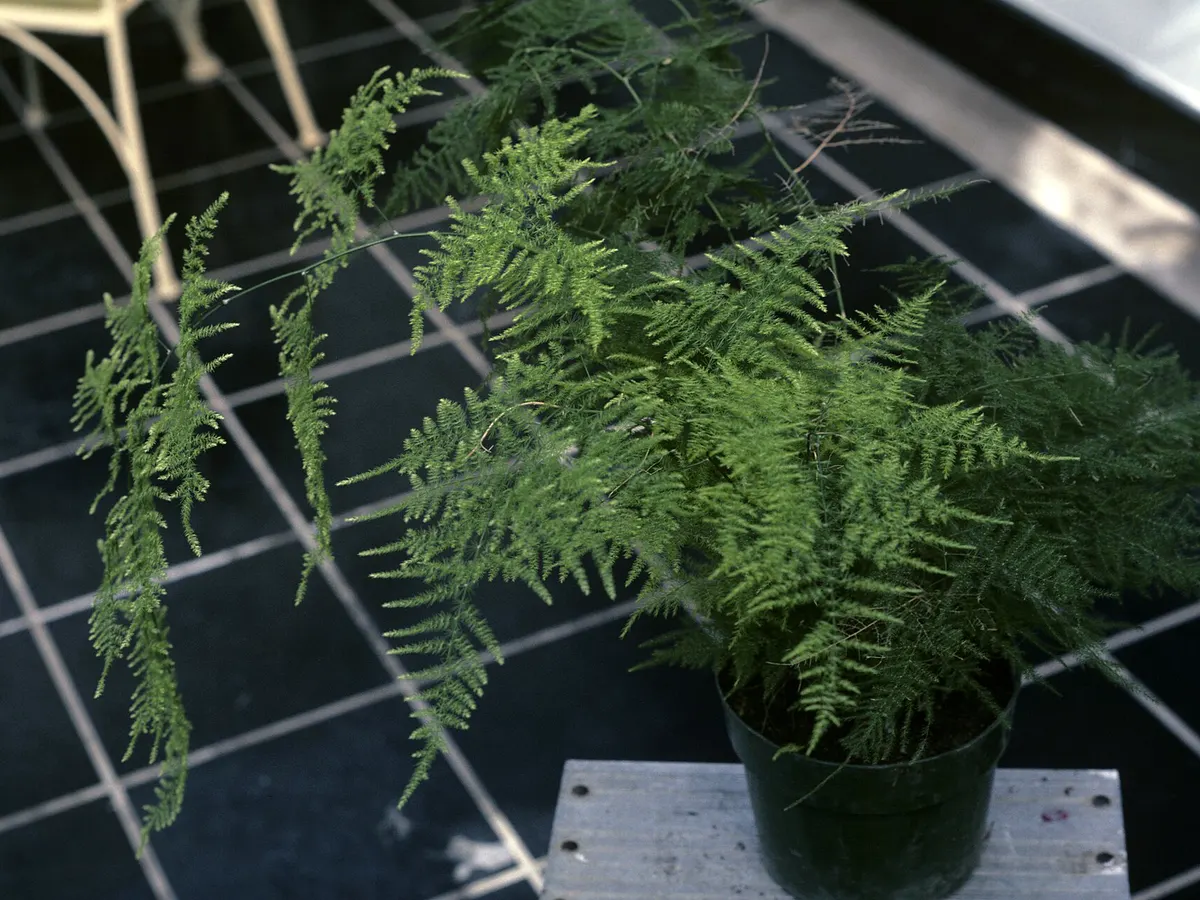
Photo: WayneRay, Public domain, via Wikimedia Commons
- Light
- Bright, indirect
- Water
- Water when the top 2–3 cm of soil are dry.
- Humidity
- Average
- Temperature
- 12–27 °C
- Care level
- Needs a little attention
- Pets
- Not safe for cats and dogs
How often to water Asparagus fern
About every 5 days in summer and every 7 days in winter. Water when the top 2–3 cm of soil are dry.
Roughly how often, in a medium pot (12–20 cm) in the light it likes. Smaller pots, brighter spots and warm balconies need water sooner; big pots and dim corners later.
- Spring every 5 days
- Summer every 5 days
- Autumn every 6 days
- Winter every 7 days
Worked out by LeafMinder’s schedule. In the app it then adapts to your home, from your “still damp” and “bone dry” answers.
Feeding and repotting
Feed about every 30 days from March to September, with a houseplant fertiliser at half strength. Not in the colder months. Check whether it needs a bigger pot every 24 months or so, ideally in spring.
Thirsty, or too wet?
- When it would like water
- The top of the mix feels dry and the fine foliage looks dull. If it goes on, the tiny needles turn yellow and shed. Water thoroughly until it drains.
- When it has had too much
- Stems yellow from the base and the mix stays soggy, sometimes with a sour smell. Let the top few centimetres dry before watering again, and empty the saucer.
Soil and pot
A well-drained houseplant mix, ideally loam-based and peat-free, suits it. Use a pot with drainage holes. Its fleshy, tuberous roots fill a pot quickly: when they lift the plant, poke out of the drainage holes or water runs straight through, move it to a pot one size bigger in spring.
Common problems
- Yellow needles falling everywhere
- The mix dried out completely, or the plant gets too little light. Try first: Water as soon as the top of the mix is dry and give it bright, indirect light. Cut bare stems to the base; new shoots follow from the roots.
- Brown, crispy tips
- Dry air, or hot direct sun on the foliage. Try first: Move it out of direct sun and away from radiators. A pebble tray helps raise humidity.
- Fine webbing and speckled foliage
- Spider mites, common in warm, dry rooms. Try first: Rinse the plant in the shower, raise humidity and check the stems and undersides every week.
- White cottony tufts on the stems
- Mealybugs, which hide where stems branch. Try first: Remove them with a soft brush or a cotton bud dipped in water, and repeat weekly until they're gone.
- Long, straggly stems that start climbing
- Normal for a mature plant, which sends up twining stems. Try first: Give them a small support, or cut them back to the base to keep the plant bushy.
Not sure what you’re seeing? A photo health check suggests possible causes. How health checks work
Propagation
Divide it in spring when you repot. Ease the plant out of its pot, pull or cut the tuberous roots into two or three pieces, each with some stems, and pot them separately. It can also be grown from the seeds inside ripe berries, sown in spring in a warm spot. Wear gloves, as the sap can irritate skin.
Varieties and relatives
- 'Nanus': A compact, low-growing form with spreading, branched sprays of foliage.
- 'Pyramidalis': Grows more upright, in a bushy, narrow pyramid shape.
- Sprenger's asparagus (Asparagus densiflorus): Coarser, brighter green needles on long, arching stems, good in hanging pots. It is also toxic to pets.
- Sicklethorn (Asparagus falcatus): A large climbing relative with sickle-shaped leaves and sharp thorns.
Questions people ask
How often should I water an asparagus fern?
About every 5 days in spring and summer, every 6 in autumn and about every 7 in winter, in a medium pot indoors. Check that the top 2–3 cm are dry first, and don't let the pot dry out completely.
Is asparagus fern toxic to cats and dogs?
Yes, it is toxic to cats and dogs. The berries can cause vomiting, stomach pain and diarrhoea, and the sap can irritate skin. Keep it out of reach, and call your vet if a pet chews it.
Is asparagus fern a real fern?
No. It belongs to the asparagus family, like the vegetable. Unlike ferns, it flowers, with tiny white blooms followed by small dark berries, which are toxic.
Why is my asparagus fern dropping needles?
Usually because the mix dried out completely, or because of low light or warm, dry air. Water when the top feels dry, give it bright, indirect light and cut bare stems back; new shoots grow from the roots.
Sources and licences
This care guide was written with AI and checked against the sources below.
- Care checked against: NC State Extension Gardener Plant Toolbox, Royal Horticultural Society, Royal Horticultural Society, Royal Horticultural Society, ASPCA, Pet Poison Helpline.
- GBIF Backbone Taxonomy: other botanical names. Record. CC BY 4.0. GBIF Secretariat (2023). GBIF Backbone Taxonomy. Checklist dataset https://doi.org/10.15468/39omei accessed via GBIF.org on 2026-11-15.
Material from these sources keeps its own licence; LeafMinder’s copyright doesn’t extend to it, and the sources don’t endorse LeafMinder.
General guidance. Every home is different, so the soil is always the best guide. About this advice
From LeafMinder’s plant care guides: leafminder.eu/plants/asparagus-fern