



Aeonium
Aeonium arboreum · Crassulaceae · Succulent
Also called Tree houseleek, Aeonium Zwartkop
It grows mainly in the cooler months and rests in summer heat, when the rosettes close up; water less then. Let about half the pot dry between waterings and keep it frost-free.
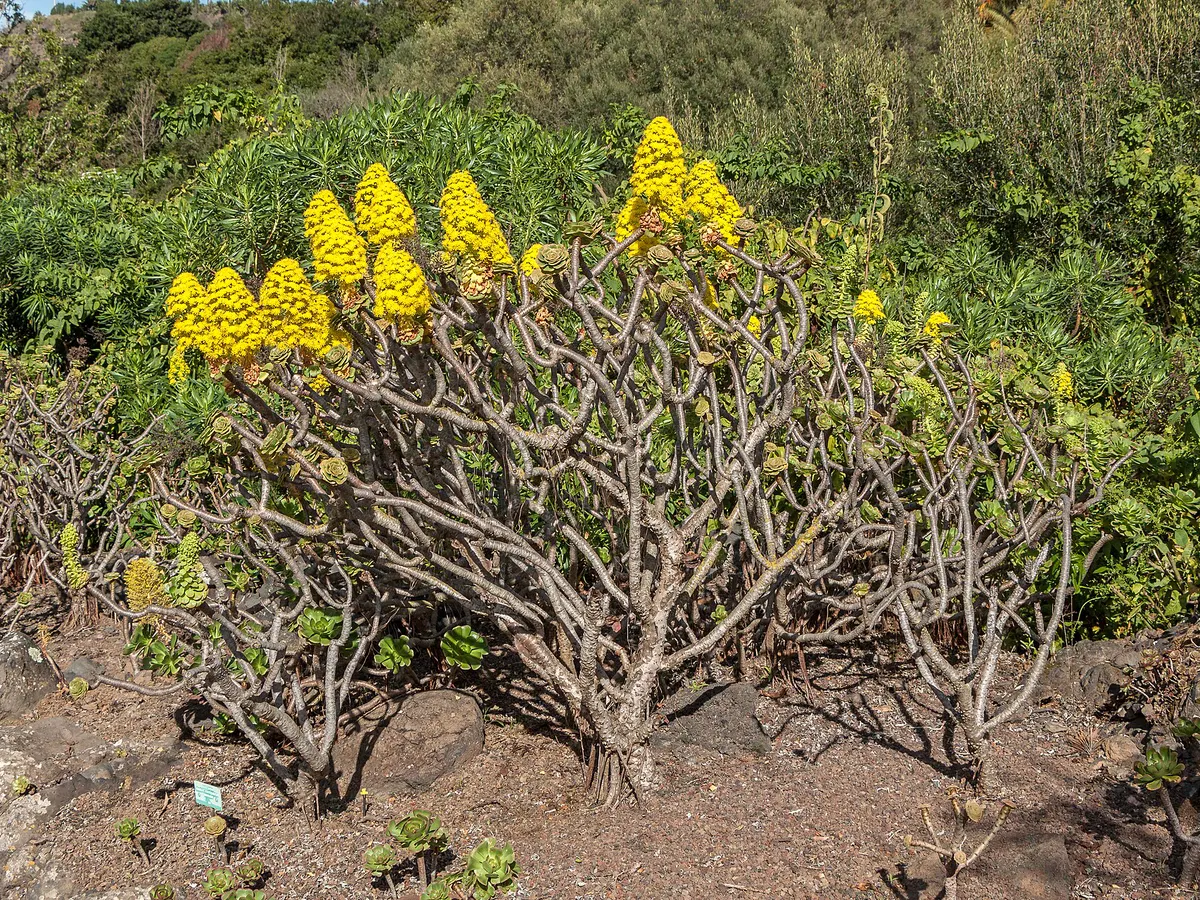
Photo: H. Zell, CC BY-SA 3.0, via Wikimedia Commons
- Light
- Direct sun
- Water
- Water when about half the pot has dried out.
- Humidity
- Normal room air is fine
- Temperature
- 5–30 °C
- Care level
- Easy-going, a good first plant
- Pets
- Pet safety not confirmed
How often to water Aeonium
About every 8 days in summer and every 10 days in winter. Water when about half the pot has dried out.
Roughly how often, in a medium pot (12–20 cm) in the light it likes. Smaller pots, brighter spots and warm balconies need water sooner; big pots and dim corners later.
- Spring every 9 days
- Summer every 8 days
- Autumn every 9 days
- Winter every 10 days
Worked out by LeafMinder’s schedule. In the app it then adapts to your home, from your “still damp” and “bone dry” answers.
Feeding and repotting
Feed about every 30 days from March to October, with a houseplant fertiliser at half strength. Not in the colder months. Check whether it needs a bigger pot every 24 months or so, ideally in spring.
Thirsty, or too wet?
- When it would like water
- The leaves feel soft and thin instead of firm, may wrinkle, and the rosettes droop or close up a little. Water thoroughly once about half the pot is dry, and the leaves firm up within a day or two.
- When it has had too much
- Leaves turn yellow or see-through and fall easily, and the stem goes soft and dark near the soil. Stop watering, let the pot dry well, and if the stem has rotted, cut off a healthy rosette and root it again.
Soil and pot
Use a gritty, fast-draining mix: cactus mix, or ordinary potting mix with about half perlite or pumice. A pot with a drainage hole is essential, and terracotta helps the mix dry evenly. Repot about every two years, at the start of a growing spell in early autumn or spring, when the plant becomes top-heavy or roots fill the pot.
Common problems
- Rosettes closing up in summer
- A natural summer rest in heat; the plant cups its leaves and may drop some lower ones to save water. Try first: Water less and skip feeding until cooler weather, when the rosettes open again. Keep it in bright light, out of the hottest sun.
- Soft, black stem near the base
- Rot from soil that stayed wet, often in a pot without drainage or in cool weather. Try first: Cut above the soft part into firm, clean tissue, let the cutting dry for a few days and root it in dry, gritty mix.
- Long, bare stems and small rosettes
- Too little light; dark varieties also turn green. Try first: Move it to your sunniest window, and outdoors in summer if you can, getting it used to direct sun over a week or two.
- Pale or brown patches on the leaves
- Sunburn after a sudden move from indoors into strong sun. Try first: Move it back to slightly gentler light and increase the sun gradually; damaged leaves won't recover, but new growth will be fine.
- White fluffy clumps between the leaves
- Mealybugs, sometimes aphids, which hide deep in the rosette. Try first: Remove them with a cotton bud dipped in rubbing alcohol and check the plant weekly until no new ones appear.
Not sure what you’re seeing? A photo health check suggests possible causes. How health checks work
Propagation
Aeoniums root easily from stem cuttings. Cut a rosette with a few centimetres of stem, let the cut end dry for at least three days, then set it in dry, gritty mix and water lightly once roots form, after a couple of weeks. Do it while the plant is growing, in spring or early autumn. Side rosettes can be taken off and rooted the same way.
Varieties and relatives
- 'Zwartkop': Glossy, almost black rosettes that need full sun to stay dark; new growth is greener.
- 'Atropurpureum': Purple-red leaves in full sun that turn greener in lower light.
- Haworth's aeonium (Aeonium haworthii): A small, bushy relative with blue-green, red-edged rosettes that branches freely.
- Canary Island aeonium (Aeonium canariense): Very large rosettes of soft, hairy, slightly sticky leaves on a short stem; it makes offsets rather than branches.
Questions people ask
How often should I water an aeonium?
About every 8–9 days from spring to autumn and every 10 days in winter, in a medium pot indoors. Check that about half the pot has dried first, and give less when the rosettes close up in summer heat.
Is aeonium toxic to cats and dogs?
Its safety isn't confirmed: the ASPCA doesn't list aeonium, and no reliable source settles it either way. Keep it out of reach of pets, and call a vet if one chews it and seems unwell.
Why are my aeonium's rosettes closing up?
In summer heat aeoniums rest: the rosettes cup inwards and some lower leaves fall. That's normal; water less and wait for cooler weather, when they open and grow again. Closing in winter, with soft leaves, is more likely thirst.
Why did my aeonium die after flowering?
A rosette that flowers dies afterwards; that's how aeoniums work. On branching plants like Aeonium arboreum, the other rosettes carry on, so cut off the spent stem. If the only rosette flowered, take cuttings from any side shoots before it fades.
Sources and licences
This care guide was written with AI and checked against the sources below.
General guidance. Every home is different, so the soil is always the best guide. About this advice
From LeafMinder’s plant care guides: leafminder.eu/plants/aeonium